What I Want Readers to Feel
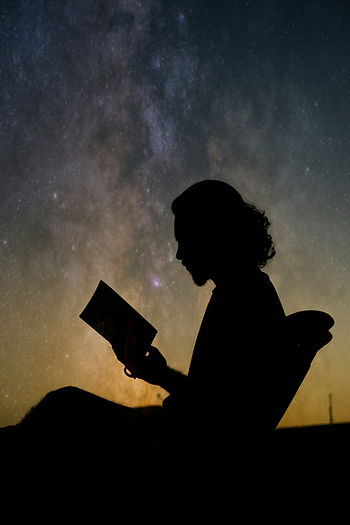
I think one of the strangest parts of writing is knowing that, eventually, a story stops belonging entirely to you.
You can spend months or years deciding what a character wants, what a scene means, what an image is doing, where the emotional pressure should build, and what you hope will remain after the last page.
Then someone else reads it.
And they bring everything they have lived with them.
They may notice something you barely thought about. They may love the character you expected them to hate. They may forgive someone you never would. They may read an ending as hopeful when you thought it was devastating, or find grief in a scene you wrote as relief.
I love that.
When someone finishes one of my stories, I do not have one emotion I need them to leave with. Depending on the story, I might want them devastated, hopeful, emotionally raw, relieved, furious, or somewhere between several of those things.
What matters more is that something remains.
I want readers to feel something
This may be an incredibly sophisticated literary goal, but I want to make people cry.
Preferably a lot.
That does not necessarily mean sadness.
I want the tears from laughing so hard that you have to put the book down. I want the tears that come from grief. I want the ones that show up when something is unexpectedly tender. I want that strange emotional response where you know something has gotten under your skin but could not explain exactly what emotion caused it if someone asked.
Those are some of my favorite experiences as a reader.
There is something wonderful about a story reaching far enough into you that your body reacts before you have managed to turn the feeling into language.
But there is an important distinction in there for me.
I do not want readers to feel as though I am standing behind the page telling them when they are supposed to cry.
There is a thin line between creating room for emotion and trying to manufacture it.
I want to stay on the first side of that line.
The scene should give you what you need to respond. The characters should have earned whatever happens. The emotional consequence should exist because of everything that came before it.
What you do with that belongs to you.
Maybe you cry.
Maybe you laugh because your response to emotional devastation is apparently terrible timing.
Maybe you stare at the wall for five minutes.
All valid.
I want people to see themselves without being introduced to themselves
Being seen is one of the most important things I want readers to get from my work.
Especially readers who have spent a lot of time seeing people like themselves treated as unusual, explanatory, tragic, inspirational, controversial, or something a story has to justify.
There is a particular kind of relief in encountering a character who shares something with you and discovering that the story considers that fact completely ordinary.
They can still be having an absolutely terrible time.
In fact, knowing my writing, they probably are.
But their identity does not have to be the reason.
A queer character can be trapped in a haunted house because haunted houses have terrible boundaries, not because the narrative has decided queerness must be punished.
A disabled character can be angry, reckless, desirable, funny, wrong, exhausted, brilliant, selfish, generous, frightened, or deeply inconvenient.
A character does not need to represent an entire group correctly.
They need to be allowed to be a person.
I think there is enormous value in seeing someone like yourself occupying a story without the narrative stopping to explain why they are allowed to be there.
Sometimes recognition comes from the huge things. More often, I think it comes from details.
A thought you have had.
A joke you recognize.
A way of moving through the world that you assumed no one else noticed.
A relationship dynamic that feels familiar enough to make you sit up a little straighter.
That quiet oh is something I want very badly for readers.
I am not writing lessons
Readers who do not share a character's experiences are welcome in my work too.
I hope they understand something.
I hope they become curious.
I hope they encounter ways of living or thinking they had not considered before.
But I am not writing characters primarily to explain them to outsiders.
A novel is not an orientation packet.
If someone learns something from one of my stories, great. Fiction can create enormous empathy because it asks us to spend time inside lives different from our own. I think that is one of the things stories are exceptionally good at.
But the character still has to exist for themself.
They should not spend the entire book turning toward the reader and explaining their identity, body, relationship, culture, or pain in easily digestible pieces.
Sometimes the reader can simply keep up.
That is part of being invited into someone else's experience.
I want discomfort to be useful
I like uncomfortable stories.
Not necessarily stories that are relentlessly miserable, although I clearly have some affection for those too.
I mean stories that make you notice your own reaction.
Discomfort can teach us something about the assumptions we carry.
Why did that choice bother you?
Why were you willing to forgive one character but not another?
Why did something feel romantic until the story shifted the angle slightly?
Why did you recognize danger and still want the character to move closer?
Why did an ending feel unfair?
Sometimes the answer tells you something about the story.
Sometimes it tells you something about yourself.
I do not think every uncomfortable reaction needs to be corrected. Reading is not a series of moral tests where the author waits at the end with a grading rubric.
But fiction gives us a remarkably safe place to examine our instincts.
You can sit with a reaction.
Argue with it.
Change your mind.
Keep your original interpretation.
Read the same scene five years later and discover that you no longer understand it the same way.
I love that possibility.
I want complicated characters to stay complicated
My favorite characters are often the ones you love to hate and hate to love.
People are inconsistent.
Someone can be an asshole and still be capable of astonishing kindness.
Someone generous can also be cruel.
A person can do the right thing for a terrible reason or make an awful choice because they sincerely believe it is the kindest option available.
I do not want a reader's feelings toward a character to remain static simply because the story introduced them as likable or unlikable.
I want affection to become irritation.
I want suspicion to become sympathy.
I want you to understand someone and still think they are behaving terribly.
I want you to know a decision is wrong and understand exactly why the character makes it anyway.
Some of my favorite fictional relationships with characters involve some version of:
I love you.
Stop doing that.
Oh no.
Please stop.
I know why you're doing it.
That somehow makes this worse.
Those conflicting reactions mean the character has become something more complicated than a role in the plot.
I would love readers to argue about what something means
One of my genuine writing dreams is two readers arguing about the meaning of something I wrote.
Not because I want the writing to be incomprehensible.
I want there to be enough room for interpretation that two people can read the same scene, understand what happened, and still disagree about what it means.
I do not like spelling everything out.
A story can guide attention. It can provide context. It can build patterns and consequences.
Eventually, though, I want to trust the reader.
You decide whether something was loving.
You decide whether someone was forgiven.
You decide whether a character made the best choice available or simply the choice they could live with.
You decide whether an ending is hopeful.
I may have my answer.
You do not have to share it.
In fact, if two people finish something I wrote and immediately start arguing about whether a character was right, I will probably be delighted.
Sadness can come from more than death
I am interested in grief, but not only grief for people who have died.
There are so many things we can lose.
A future.
A relationship.
A version of someone we used to know.
A version of ourselves.
A place we can no longer return to in quite the same way.
The certainty that something would work out.
Sometimes a character realizes something is already gone long before they are willing to admit it.
Sometimes they choose the loss themselves because keeping what they have would cost more.
Sometimes they make the expensive choice knowing exactly what it will take from them.
Those are the kinds of sadness that stay with me.
They are painful because they are rarely clean.
You can grieve something and know losing it was necessary.
You can miss someone you should never let back into your life.
You can mourn the person you used to be without wanting to become them again.
Stories give those contradictions room to exist together.
Joy matters more when the story has room for it
I write plenty of dark material, but I do not want darkness to flatten everything around it.
I love small joy.
Quiet intimacy.
Someone making terrible tea for another person.
A joke at exactly the wrong moment.
Two people sitting together without needing to fill the silence.
Choosing yourself after spending too long believing that choice was selfish.
Finding the person who understands why something tiny matters.
Laughing when everything else is going badly.
Those moments matter because life does not organize emotion into clean sections.
People laugh at funerals.
People make jokes in hospitals.
People fall in love during terrible years.
Some of the happiest memories of a life can exist inside periods we would otherwise describe as awful.
I want stories to have that texture.
Darkness works better when the characters have something they genuinely want to keep.
Even dark stories need hope somewhere
I do not think every story needs a hopeful ending.
Some stories should hurt.
Some endings are tragic because that is the ending the story has earned.
Some characters lose.
Some choices cannot be repaired.
But I do think every story needs hope somewhere along the way.
Not necessarily objective hope.
The character does not need to actually be right.
Sometimes hope is the belief that this time I am doing the right thing.
Sometimes it is believing there is still a way out.
Sometimes it is trusting the wrong person.
Sometimes it is thinking one more attempt will fix everything.
Hope can even be part of what makes a tragedy work.
If nobody ever believes things might change, then losing the possibility does not carry much weight.
The reader has to be allowed to imagine another outcome, even briefly.
The character usually has to imagine one too.
Closure does not require locking every door
I like emotional closure.
I do not necessarily like closing every possible door.
An ending can settle the central emotional question while leaving part of the future unknown.
A relationship can reach a meaningful conclusion without telling us what every year afterward looks like.
A mystery can be solved while leaving one strange detail behind.
A character can understand what happened without understanding everything it means.
Open endings are sometimes treated as though the author simply stopped typing.
A good open ending still feels deliberate.
Something has changed.
Something has resolved.
The reader understands why this is where the story ends, even if the world continues beyond it.
Closure and certainty are not the same thing.
My favorite reader reaction is still "oh no"
I love thoughtful reviews. I love hearing that someone connected with a character or spent time thinking about a theme.
But some of my favorite reactions to anything I have written remain:
"Oh no."
And:
"Tell me that what I think is about to happen isn't happening."
There is something extremely satisfying about a reader seeing the pieces come together before the character does.
They know.
You know they know.
They know you know they know.
And there are still twenty pages left.
Beautiful.
That reaction means the story has built enough trust for the reader to follow where it is going and enough emotional investment for them to desperately wish they were wrong.
I cannot ask for much more than that.
I want readers to own their interpretation
This is probably the most important part for me.
If someone reads one of my stories and reaches a conclusion completely different from mine, that does not automatically mean they read it incorrectly.
A story I think is about the danger of letting love control your decisions might feel to someone else like a story about finally letting go of what has been holding you back.
Those readings can coexist.
The text is the same.
The person reading it is not.
Every reader arrives with their own history, fears, desires, relationships, losses, and ideas about what people owe each other. Of course those things affect what they see.
I think that is one of the best parts of making art.
I get to decide what I put on the page.
I do not get to decide the exact shape it takes inside another person.
And I do not particularly want to.
What I want readers to feel
Changed, maybe.
Emotionally raw.
Devastated.
Hopeful.
Amused at a deeply inappropriate moment.
Uncomfortable enough to wonder why.
Seen in a place they were not expecting to find themselves.
Furious with someone they still love.
Relieved.
Curious.
Certain.
Completely unsure.
Any of those can be right.
I do not need a reader to arrive at my interpretation for a story to have succeeded.
I want them to interpret it at all.
I want them to close the book and have an opinion.
I want them to text someone.
I want the "oh no."
I want the argument about whether the ending was hopeful.
I want someone to recognize themselves in a character who was never asked to justify existing.
I want the story to give readers enough room to feel whatever comes naturally once it reaches them.
Because by then, the story is no longer only mine.
The feeling shouldn't be either.


Comments